
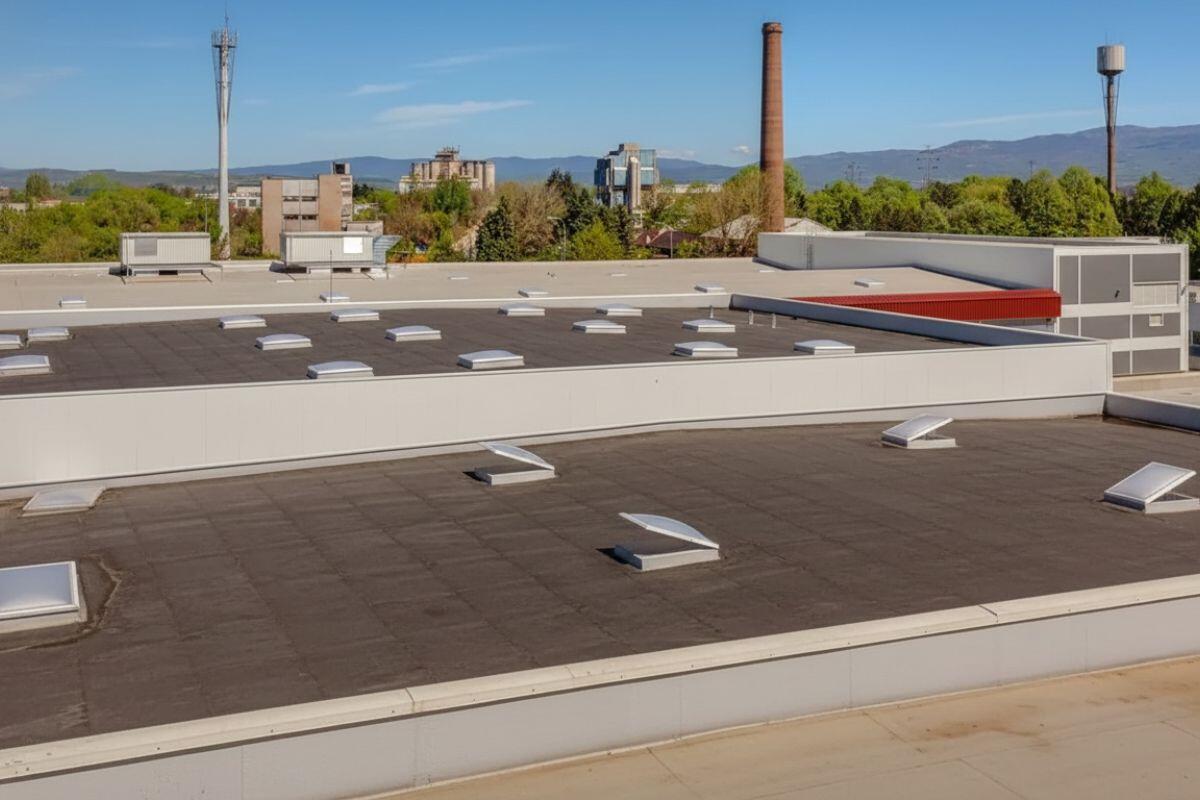
Full roof tear-off and replacement on a commercial building in St. Petersburg is a major capital event that is typically triggered by one or more of four conditions: two existing roof layers that prohibit any further recover under Florida Building Code, wet insulation findings from core cuts or infrared survey that render recover economically or technically infeasible, wind-uplift deficiency that makes the current assembly inadequate for Pinellas County's hurricane risk profile, or membrane and substrate deterioration so widespread that targeted repair no longer represents a sound investment. In this market, hurricane damage drives more tear-off decisions than any single other factor — a full season of wind events, storm debris impact, and sustained rain infiltration on an aging membrane can push a building from the recover-candidate category to the replacement category within a single hurricane season.
The tear-off phase itself is more complicated in St. Petersburg than in most US commercial markets because of the wet-season timing constraint. Pinellas County's commercial roofing season peaks in late fall through spring, when Florida's dry season provides reliable installation conditions and before hurricane season imposes urgency. Projects that begin tear-off in June, July, or August require careful daily weather monitoring and must be staged to ensure that no deck area is left exposed to afternoon thunderstorm risk overnight. A 20,000-square-foot warehouse roof with the membrane torn off and new material not yet installed is extremely vulnerable to the three-inch overnight event that occurs randomly through St. Pete's wet season. Our wet-season tear-off protocols include strict limits on the area of exposed deck at any given time, pre-staged temporary waterproofing materials for rapid deployment when afternoon radar shows developing convection, and daily project meetings with weather service data to manage exposure risk throughout the project.
Deck condition assessment during tear-off frequently produces scope changes that must be built into every Pinellas County replacement project's contingency budget. Steel decks on Gateway area and Ulmerton Road commercial buildings that have experienced years of slow moisture infiltration may have surface rust or localized section loss at roof deck flanges — conditions that require deck cleaning, priming, or panel replacement before new insulation is set. Wood substrate systems on historic downtown commercial buildings may reveal rot or delamination in sheathing that appeared sound from above. The subtropical humidity and warmth of St. Pete's climate is particularly aggressive toward organic deck materials — wood components that have held moisture at ambient temperatures of 70-80°F develop rot faster than in cooler climates, and the extent of damage is often greater than pre-tearoff inspection suggests.
Insulation specification at replacement time is the decision that establishes the new system's energy performance and wind-uplift resistance for the next 20 to 30 years. Florida Building Code requires a minimum of R-25 insulation for new commercial roof construction in Climate Zone 2 (Pinellas County). On a tear-off project, meeting this requirement while also achieving code-required wind-uplift resistance through properly calculated fastening patterns is the structural baseline. Tapered insulation installation — bringing low-spot areas up to positive slope toward drains — is the replacement phase opportunity to address chronic drainage problems that have been degrading the existing system's performance. The cost of tapered insulation is highest when done as a retrofit but is most effective at the replacement phase when the entire assembly is being rebuilt anyway.
Occupied building phasing is one of the most operationally demanding aspects of commercial roof tear-off in St. Pete. Johns Hopkins All Children's Hospital cannot close patient care floors while roofing work proceeds above. Bayfront Health's occupied inpatient and outpatient facilities require detailed coordination between facilities engineering staff and roofing crews to ensure that HVAC operation, medical air intakes, and noise-sensitive areas are protected throughout the project. Multi-tenant office buildings in Carillon Business Park have tenant leases that may include quiet enjoyment provisions that constrain the hours and character of construction activities. We develop phased tear-off sequences for occupied St. Pete commercial buildings that maintain building weathertightness throughout the project — typically working in sections of 2,000 to 5,000 square feet, completing tear-off and new membrane installation on each section before opening the next.
Barrier island staging logistics present constraints not encountered on inland Pinellas County replacement projects. Hotel and resort buildings in St. Pete Beach and Treasure Island may have the only access to their rooftops through interior stairwells or a single exterior ladder point — a material handling constraint that affects project duration compared to buildings with ground-level staging access and crane delivery options. Palm tree-dense property lines, seawall proximity, and limited staging areas that conflict with hotel parking and guest arrival functions require careful pre-project coordination with hotel operations management. We conduct pre-project site meetings with barrier island property management to develop staging and access plans before any work begins, rather than discovering access limitations after the project mobilization day.
Permit requirements for commercial roof tear-off and replacement in St. Petersburg are enforced by the City of St. Pete Building and Development Services department or by Pinellas County, depending on jurisdiction. Florida Building Code requires permits for new roofing installations on most commercial buildings, and inspections at key phases — insulation installation, membrane installation, and final — are standard for permitted projects. Permit timelines in the current Pinellas County construction market run two to four weeks for straightforward commercial roofing permits; complex or large projects may take longer. Projects planned for pre-hurricane-season completion need to account for permit timeline in their scheduling, starting the permit application process as early as February or March for projects targeting April-May completion.
Material selection for replacement projects is St. Pete-optimized: white TPO with full-fleece or scrim reinforcement is the dominant choice for new commercial flat roofing given its combination of reflectivity, weldable seams, FBC-compliant attachment options, and competitive installed cost. Standing seam metal is specified for sloped applications where the aesthetic and longevity advantages of metal justify its cost premium over TPO. Modified bitumen two-ply systems are chosen for historic buildings, buildings with complex roofline profiles better suited to modified bitumen detailing, and applications where debris impact resistance is a specific design priority. Each of these systems is matched to the building type, exposure, and owner priorities rather than applied as a default regardless of fit.
Questions Owners Ask
What are the signs that my St. Pete commercial building needs full replacement rather than repair or recover?
Four conditions independently justify full replacement: two existing roof layers present (code requires tear-off before a third layer); core cuts revealing wet insulation across more than 20 to 25 percent of the roof area; wind-uplift deficiency that would require full system replacement to remediate; or membrane deterioration so widespread that the cost of systematic repair approaches replacement cost without achieving the longevity that a new system provides. Any one of these conditions makes replacement the appropriate recommendation regardless of whether active leaks are present.
How long does a full Commercial Roof Replacement take on a typical Pinellas County commercial building?
A 15,000 to 25,000 square-foot single-story commercial building with standard staging access takes five to twelve working days for full tear-off and TPO replacement under normal conditions. Wet-season scheduling (June-September) extends duration by 20 to 30 percent due to daily weather monitoring requirements and limited daily installation windows before afternoon thunderstorm development. Occupied buildings with phased sequencing take proportionally longer based on permitted daily open area. Large or complex buildings — hospital campuses, multi-story properties, barrier island hotels — require individualized scheduling analysis before duration estimates are provided.
Should I replace my roof before or after the next hurricane season?
Before, whenever that is structurally or financially feasible. A commercial roof that you know needs replacement is at elevated hurricane damage risk in its current condition. The cost of temporary emergency repair following a hurricane event on an already-compromised roof — plus the storm-surge pricing and contractor availability constraints of the post-event market — typically exceeds the carrying cost of the replacement delay. If you are within 12 months of your planned replacement, completing it before June 1 is the financially sound choice in a hurricane-exposed market.
What happens to my old roof materials during tear-off — are there recycling options?
TPO and PVC single-ply membrane materials have limited recycling options in the Florida market, though some manufacturer take-back programs accept clean, separated material. Modified bitumen and built-up roofing materials typically go to a licensed C&D landfill. We manage tear-off material disposal in compliance with Pinellas County solid waste requirements and can investigate current recycling program availability for specific membrane types on a project-by-project basis. Insulation board materials may have recycling options depending on material type and local program availability at the time of the project.
Will my lender or insurance carrier require documentation of my new roof installation?
Yes, in most cases. Commercial mortgage lenders typically require updated replacement cost appraisal and property condition documentation when a major capital improvement like full roof replacement is completed. Insurance carriers require notification of material changes to the covered property, and a new roof installation typically triggers a rate review — most commonly resulting in a rate reduction for newer roofing systems that carry longer warranties and meet current code requirements. We provide installation documentation packages including permit records, manufacturer warranty registration, and project completion documentation in formats appropriate for both lending and insurance purposes.
 Commercial Roof Repair in St. Petersburg | Planned & Emergency
 Commercial Re-Roofing
 Occupied Building Re-Roofing
 Roof Recover and Overlay