Raymond James Financial's headquarters tower on Raymond James Boulevard in St. Petersburg is one of the most recognizable Class A office buildings on the Gulf Coast, and the broader Carillon Park and Gateway District office campuses represent a professional office market that has grown significantly as the city's tech and financial services economy has diversified. St. Petersburg's professional office market benefits from proximity to Tampa while maintaining a distinct character, and the city's aggressive downtown investment has added Class A buildings along Beach Drive and Central Avenue that require the same quality of roofing work as comparable properties in larger Florida metros.
Pinellas County's Florida Building Code wind requirements — design wind speeds of 140 to 150 mph depending on location — apply to every office building re-roofing project in St. Petersburg. On a Class A office building with occupied professional spaces and a high-value lease roll, the consequences of a wind-event roof failure extend beyond physical damage to potential business interruption claims from tenants, reputational damage, and lease termination rights under force majeure or landlord-failure-to-maintain provisions. We treat Florida Product Approval compliance on St. Petersburg office projects as a non-negotiable floor, not a specification option, and we verify that the specific system — membrane, insulation, adhesive, and fastening — carries the applicable Product Approval numbers before a single square foot is installed.
Occupied building protocols in St. Petersburg's financial and professional services market focus on continuity and communication. Raymond James, Duke Energy, and the major healthcare administration tenants in the Gateway District have facilities management teams that track building maintenance with the same rigor they'd apply to any other operational risk. We assign a dedicated project manager — not a rotating crew lead — to every Class A St. Petersburg office project, and that project manager is reachable by the building's chief engineer at any time during business hours. Daily progress reports, weekly schedule updates, and prompt notification of any condition that could affect building weathertightness are standard deliverables.
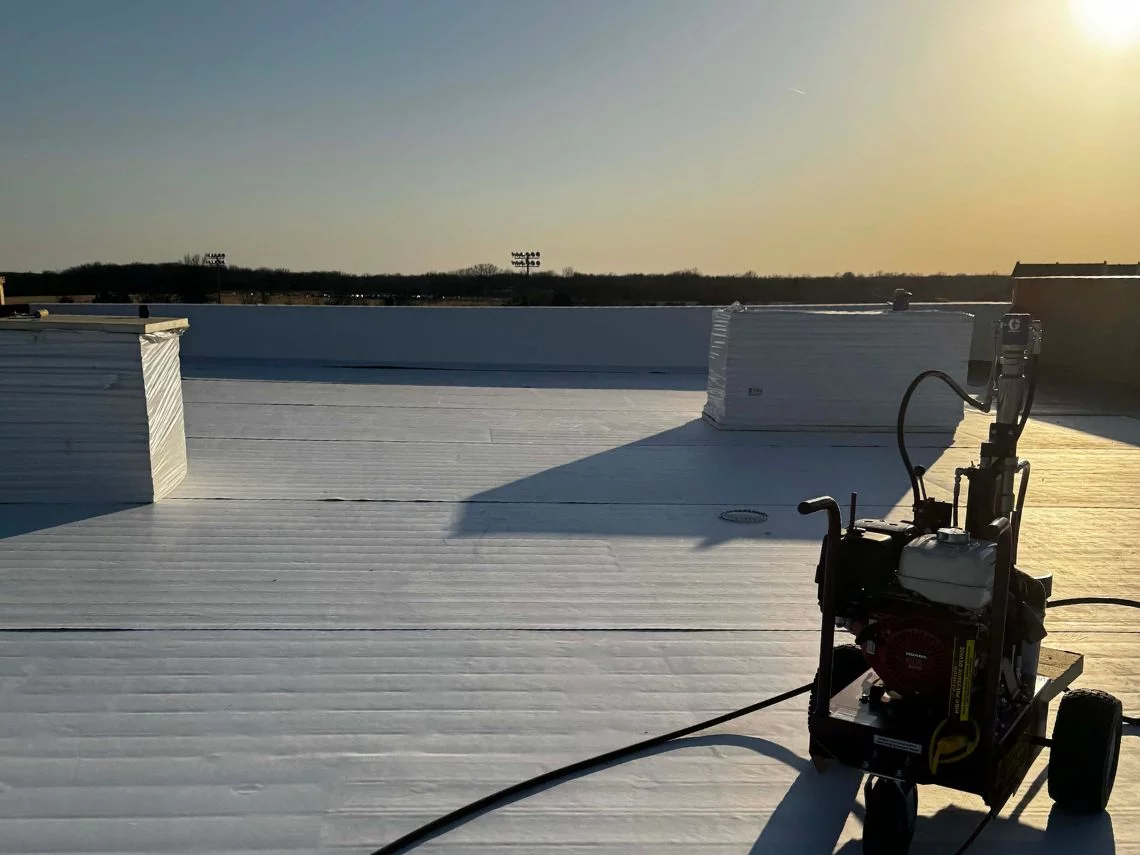
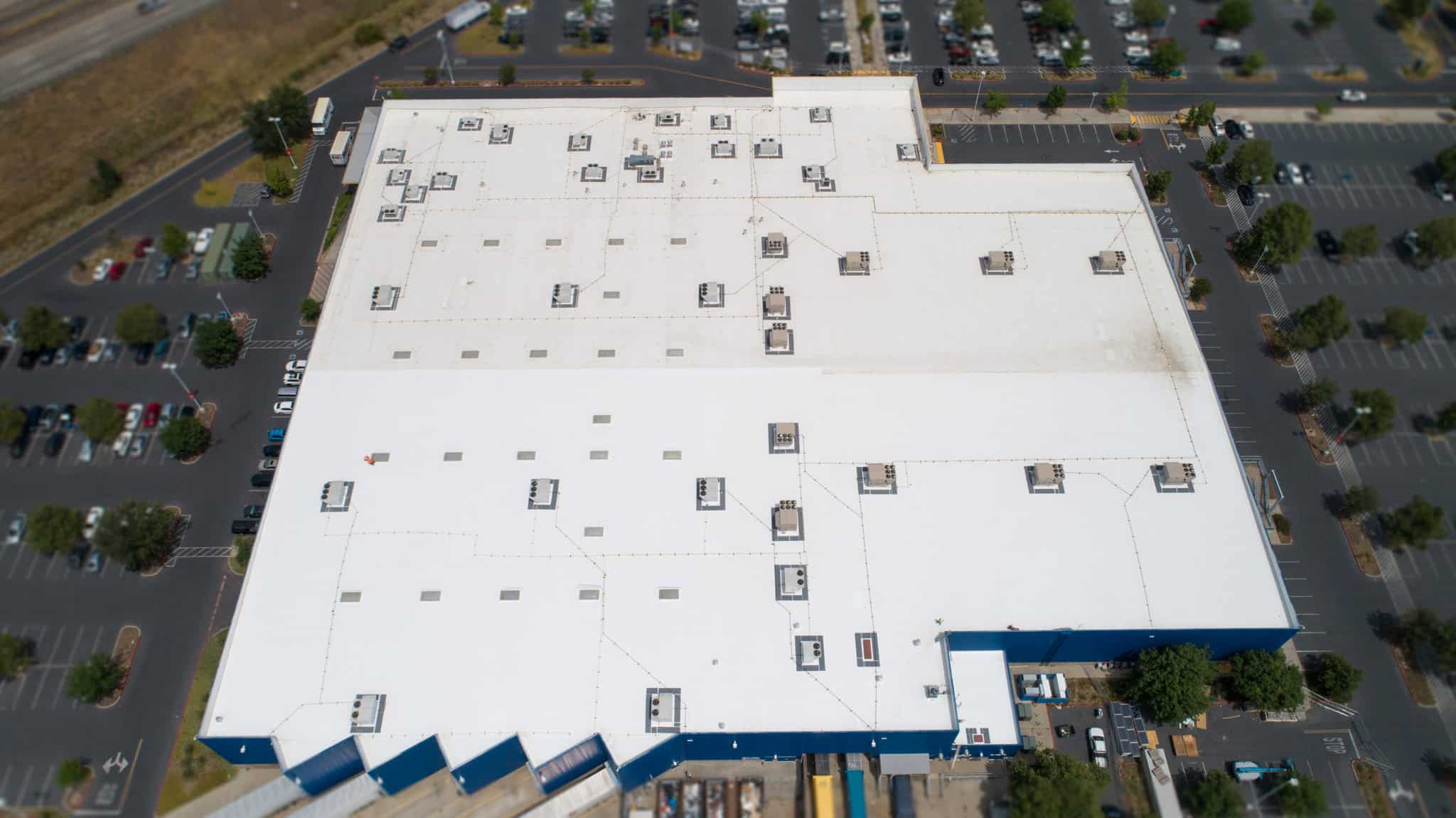
Florida's energy code requirements for Sarasota and Pinellas counties include cool-roof provisions that apply to office building re-roofing. White TPO is the standard specification for St. Petersburg Class A office buildings for the same reason it dominates the broader Florida nonresidential market: it satisfies the reflectance requirement, performs well in Gulf Coast UV and heat, and is available from multiple manufacturers with current Florida Product Approval numbers. For buildings where the rooftop is visible and aesthetics matter — particularly on mid-rise buildings in the walkable downtown core — we offer white PVC membranes with a higher-gloss finish that maintains its appearance better than TPO in the presence of Gulf Coast salt air.
HVAC coordination on a St. Pete Class A office building is non-negotiable in Florida's climate. Air conditioning is a life-safety system here, and any HVAC outage that extends into afternoon business hours in June through September creates conditions that require the building to be evacuated or cooled by other means. We plan rooftop equipment relocation sequences for weekend overnight windows exclusively during June through September, with backup cooling equipment on standby and same-day reconnection as a contract requirement. For buildings with chilled water systems, we confirm the cooling plant is fully operational throughout the project and plan staging so that no chiller access points or cooling tower connections are obstructed at any point.
Green roofing and rooftop amenity features are growing in St. Petersburg's revitalized downtown office market. The Beach Drive corridor and downtown core have seen rooftop terrace additions to mid-rise office buildings as owners compete for the premium tenants that value outdoor space. Rooftop terraces in St. Petersburg require waterproofing systems that can survive both hurricane wind loads and the sustained heat and UV exposure of a Gulf Coast summer. We specify fully reinforced two-ply modified bitumen systems under all walking surfaces on St. Pete rooftop terraces, with a separation layer between the waterproofing and the paver or decking system to allow inspection access to the waterproofing surface without lifting individual pavers. Every terrace gets a 48-hour flood test before it is declared watertight.
Hurricane preparedness for St. Pete Class A office buildings includes pre-storm preparation protocols that are as important as the permanent construction quality. Rooftop HVAC equipment that is not secured with hurricane ties can become airborne debris at wind speeds well below the design wind speed if the curb was improperly installed. We include pre-storm inspection services as part of our maintenance agreements for St. Pete Class A properties, typically scheduled 48 to 72 hours before projected tropical weather arrival, and we confirm that all coping, edge metal, equipment covers, and rooftop furnishings are properly secured before the storm window closes.
Lease obligations in St. Pete's institutional office market — where REIT ownership of Class A properties is common — include maintenance standards that are audited by asset managers on an annual or semi-annual basis. The maintenance standards for REIT-owned office buildings in Florida typically require manufacturer-backed warranty coverage, semi-annual inspections, post-hurricane inspection within 72 hours, and documented repair response times for tenant-reported leaks. We structure our maintenance agreements to satisfy these REIT audit requirements and provide electronic inspection reports formatted for upload to the common commercial property management platforms used by St. Petersburg's institutional landlords.
Post-storm response capacity is a service differentiator that matters enormously in the St. Petersburg market. After a major tropical system, the local contractor base is overwhelmed with demand, and national roofing companies that parachute in after storms often lack the material supply relationships and permit familiarity needed to work efficiently in Pinellas County. We maintain a local material inventory specifically for post-storm response, hold priority relationships with the Pinellas County building department for emergency permit processing, and commit to 48-hour mobilization for active maintenance agreement clients after any declared weather emergency. This capacity is built into our business model, not improvised in the aftermath of a storm.
- What wind rating is required for a St. Petersburg office building re-roof?
- Design wind speeds in Pinellas County range from 140 mph inland to 150 mph in coastal zones. Every roof system must carry a Florida Product Approval with uplift ratings meeting or exceeding the applicable design wind speed for the building's specific parcel. Confirm the design wind speed at permit pre-application. For Class A office buildings with high-value tenants, fully adhered systems that provide superior uplift resistance compared to mechanically attached options are the standard specification.
- How do you protect an occupied Class A office during a Gulf Coast hurricane?
- Pre-storm preparation includes confirming that all coping, edge metal, equipment covers, and rooftop furnishings are properly secured, all drains and scuppers are clear, and all rooftop equipment is properly anchored to its curb. A pre-storm inspection 48 to 72 hours before projected landfall identifies and addresses any vulnerabilities. Document existing conditions before the storm with dated photographs for insurance purposes. Notify your insurer before significant repairs begin post-storm.
- What is the best membrane for a St. Pete downtown office building where aesthetics matter?
- White PVC offers a higher-gloss, cleaner-appearance finish compared to TPO and has better resistance to salt air staining and algae discoloration in Gulf Coast environments. Both TPO and PVC meet Florida Building Code cool-roof requirements and are available with Product Approval ratings. For rooftop terraces or visible surfaces near ground-level viewing angles, PVC's cleaner long-term appearance justifies the cost premium over standard TPO.
- How does REIT asset management affect roofing maintenance requirements?
- REIT-owned Class A office buildings in Florida are subject to annual or semi-annual asset management audits that review maintenance records. The audit typically looks for: current manufacturer-backed warranty, semi-annual inspection reports with photographs, documentation of all repairs, post-hurricane inspection reports, and evidence of a current maintenance agreement with a qualified contractor. We provide all of these documents in formats compatible with the major commercial property management platforms used in the St. Pete market.
- How do I make my St. Pete office building roof terrace hurricane-ready?
- Rooftop terrace furniture, planters, and equipment should be secured or stored indoors before a tropical storm or hurricane. The structural waterproofing beneath the terrace should be a fully reinforced two-ply modified bitumen system rather than single-ply membrane. Perimeter edge metal and parapet caps need continuous concealed cleats, and all penetrations through the terrace waterproofing need counterflashing that is mechanically fastened rather than sealant-only. Annual inspection of the terrace waterproofing is required to identify any stress cracking or separation at the paver-to-parapet transition.
 Commercial Roof Repair in St. Petersburg | Planned & Emergency
 Commercial Re-Roofing
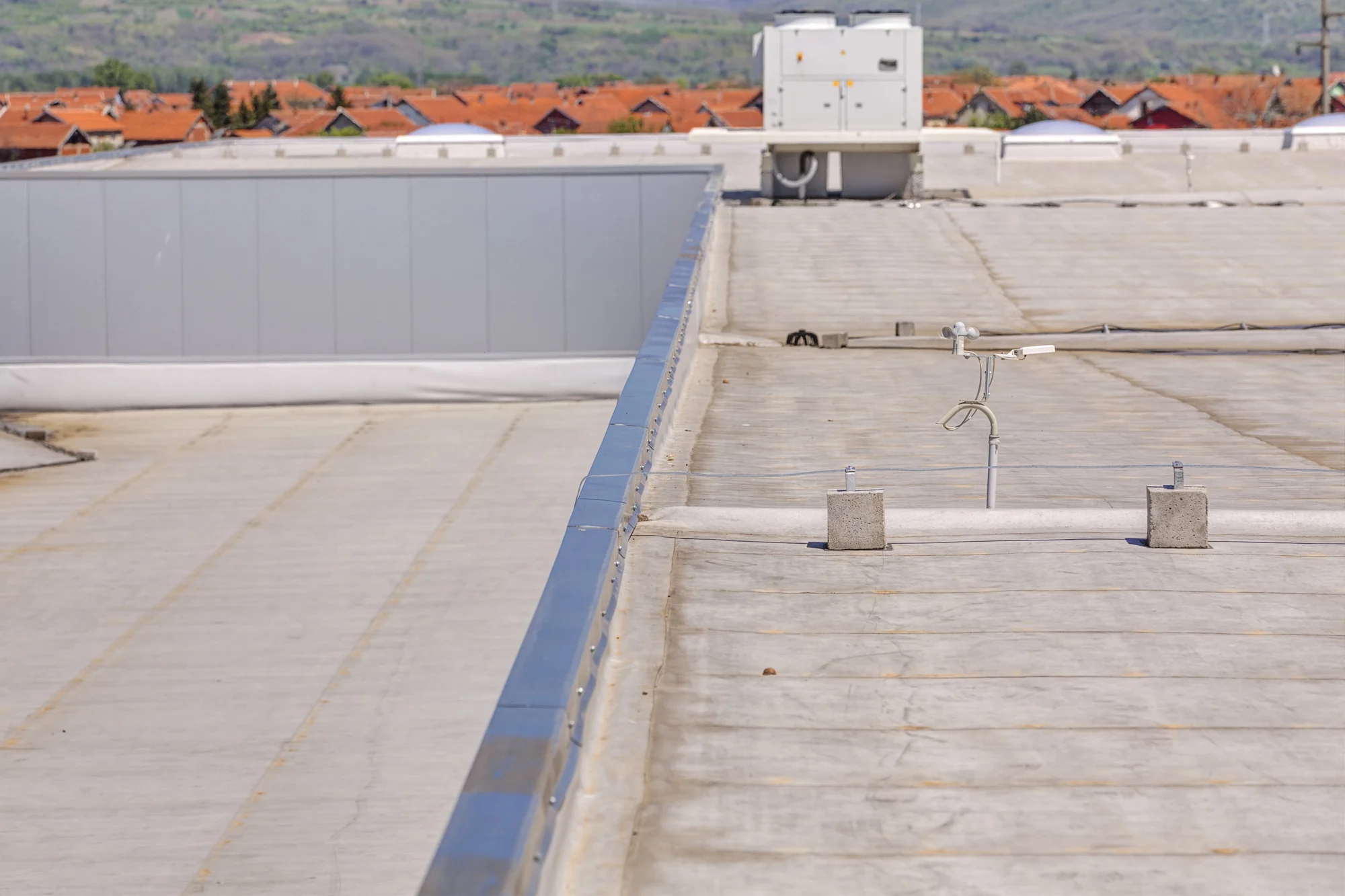 Occupied Building Re-Roofing
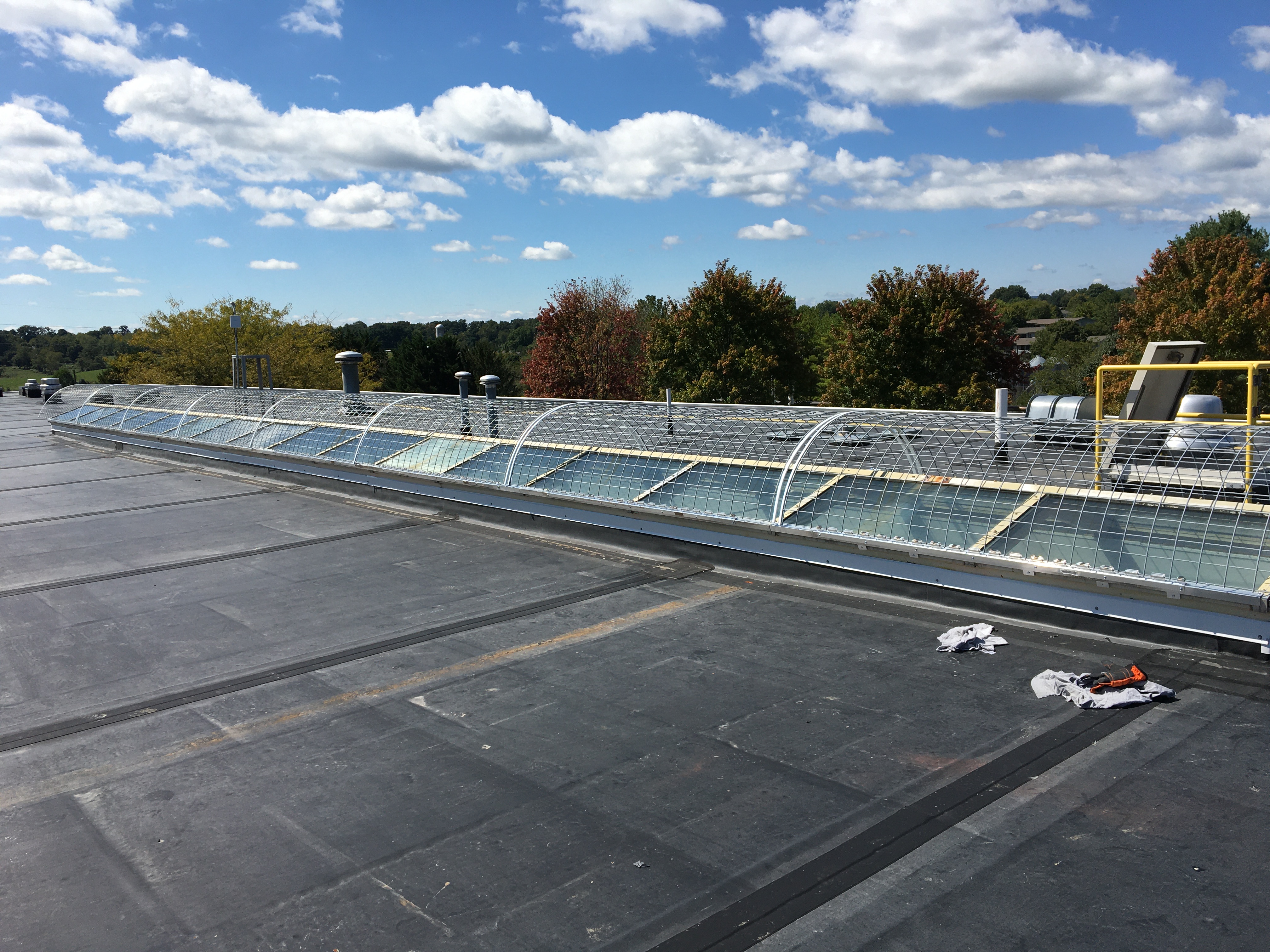 Roof Recover and Overlay