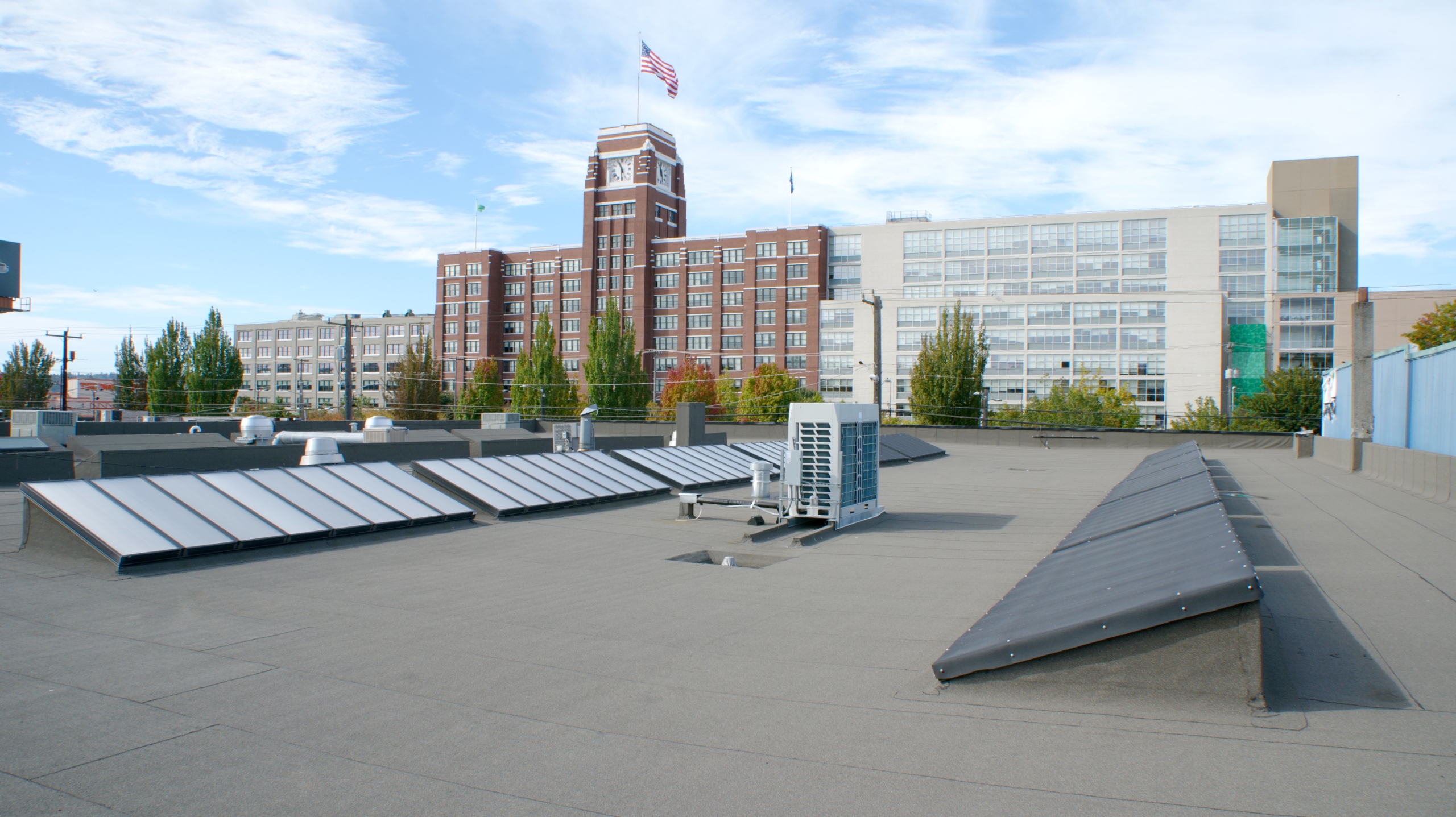
Modified bitumen roofing has been the material of choice for re-roofing historic and older St. Petersburg commercial buildings since the 1980s, and the split between SBS and APP formulations in this market is not random — it follows directly from the demands of Florida's subtropical climate. SBS (styrene-butadiene-styrene) modified bitumen is the flexible, cold-climate-optimized formulation that performs best in freeze-thaw environments where membrane flexibility at low temperatures matters. APP (atactic polypropylene) modified bitumen runs harder, more UV-resistant, and more heat-tolerant — characteristics that make it the dominant Florida specification because this market has no freeze events and abundant UV that oxidizes SBS bitumen faster than APP bitumen. Walk the rooftops of the Warehouse Arts District, the Central Avenue historic commercial corridor, or the EDGE District mixed-use buildings, and APP modified bitumen systems — torch-applied or self-adhering — represent the majority of what you will find on buildings re-roofed in the past 20 years.
The thermal environment that makes APP dominant in St. Pete is important for understanding system performance requirements. APP cap sheets applied to flat commercial roofs in Pinellas County spend six months of the year at surface temperatures above 150°F. SBS bitumen at those temperatures approaches its softening point, which can cause the binder to flow slowly at low points and deform at heavy-load contact points. APP formulations have higher softening points that remain comfortably above the surface temperatures observed in St. Pete's climate. For building owners managing historic St. Pete commercial properties where roof replacement options are constrained by structural limitations or preservation concerns, APP modified bitumen provides reliable performance without the heat-related binder movement risks that SBS carries in subtropical conditions.
Torch-applied APP cap sheets are the most common installation method on St. Pete's older commercial buildings because they provide superior adhesion and eliminate the need for adhesive materials that can fail in Florida's humidity. However, torch application on occupied historic buildings in dense urban areas — particularly in the EDGE District, Warehouse Arts District, and around the Central Avenue arts corridor where neighboring buildings, pedestrian areas, and fire-sensitive materials are common — requires careful fire safety protocols. Open-flame torch equipment on a roof adjacent to a historic wood-truss structure or over an occupied restaurant requires safety planning that goes beyond what is needed on a suburban warehouse. We operate with written hot-work permits, fire watch protocols, and fire suppression equipment staged on the roof for all torch-applied work in St. Pete's historic and densely developed commercial districts.
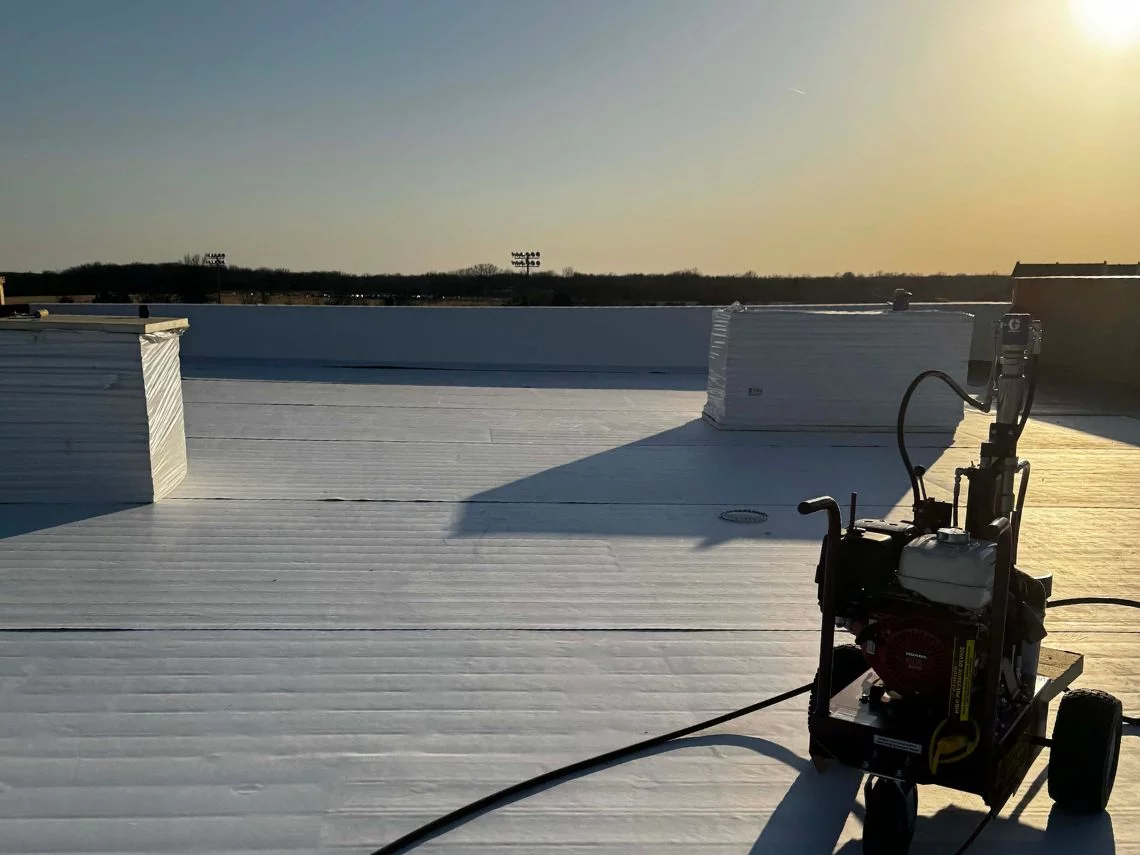
Self-adhering APP modified bitumen — cold-applied base and cap sheets that activate through contact pressure without heat — provides a solution for fire-sensitive locations where torch application is not appropriate or where building operations cannot accommodate the odor of torch work over occupied spaces. Self-adhering systems require more exacting surface preparation and temperature management during application than torch systems — in St. Pete's conditions, substrates that are too hot (above 90°F surface temperature) or that have any moisture contamination produce inadequate adhesion. Morning installation windows during the wet season are essential for self-adhering work, and applications during afternoon hours in summer are simply not appropriate regardless of owner timeline pressure.
Granule-surfaced APP cap sheets provide the UV protection that flat surfaces in St. Pete's subtropical sun require over the membrane's service life. The embedded ceramic or mineral granule layer scatters UV radiation before it reaches the underlying bitumen binder, and the color of the granule selection affects both aesthetics and thermal performance. White or light-gray granule cap sheets provide meaningful solar reflectivity improvement over traditional dark-mineral granule cap sheets — a cool-roof benefit that reduces the heat gain through the roof assembly and lowers cooling loads in the same way that reflective TPO or silicone coating does. For historic downtown buildings where architectural review committees have preferences about roof color visibility from street level or adjacent taller buildings, granule selection becomes part of a design conversation as well as a performance specification.
Flashing on modified bitumen systems — the application of membrane at parapet walls, curb penetrations, and edge transitions — is where most modified bitumen system failures in St. Pete originate. Vertical strobe (upstanding) flashings must be carried a minimum of eight inches above the finished roof surface on all parapet and curb conditions, and the transition between the field membrane and the vertical flashing membrane must be watertight against the wind-driven rain conditions that a Pinellas County hurricane event generates. On older downtown commercial buildings where masonry parapets have irregular brick surfaces, achieving a monolithic flashing bond requires careful primer application and detail work that shortcuts badly affect. The most common chronic leak complaint on St. Pete historic commercial buildings with modified bitumen systems is at parapet base flashings where the flashing termination has separated from the wall face.
Two-ply APP modified bitumen systems — a base sheet plus an APP cap sheet — provide the redundancy that single-ply systems lack and that matters in a hurricane market. If the cap sheet surface is damaged by impact debris during a storm event, the base sheet beneath provides continued waterproofing protection until permanent repair can be made. This redundancy is one of the enduring advantages of modified bitumen over single-ply TPO in applications where debris impact risk is elevated, and it is a consideration that some Pinellas County commercial owners in high-tree-canopy neighborhoods weigh against TPO's reflectivity advantage when selecting membrane systems for re-roofing projects.
Drain compatibility with modified bitumen systems requires specific attention. Drain clamp rings that were originally installed with a built-up roofing system are not always compatible with the thicker modified bitumen assembly detail at the drain flange. Forcing a modified bitumen installation to work with incompatible original drain hardware produces a compromised seal at the most critical drainage point on the roof. We replace drain hardware as a standard item when re-roofing with modified bitumen, not as an optional upgrade, because the cost of a drain retrofit is trivial compared to the leak callbacks that follow from leaving incompatible hardware in place.
Questions Owners Ask
What is the difference between SBS and APP modified bitumen, and which should I specify in Florida?
SBS (styrene-butadiene-styrene) modified bitumen is formulated for flexibility at low temperatures, making it the preferred choice in cold climates. APP (atactic polypropylene) modified bitumen has a higher softening point and superior UV resistance, making it the appropriate specification for Florida's heat and sun. In Pinellas County's subtropical climate with no freeze events, APP is the standard recommendation for cap sheet applications. SBS base sheets are sometimes used in two-ply systems because their cold-adhesion properties facilitate self-adhering installation, but the cap sheet — the performance-exposed layer — should be APP in this market.
How long does a modified bitumen roof last on a St. Petersburg commercial building?
A quality two-ply APP modified bitumen system properly installed on a sound deck with good drainage typically achieves 20 to 25 years of service life in Pinellas County conditions. Annual maintenance — drain clearing, penetration sealant inspection, and surface granule condition monitoring — is the primary factor that determines whether a system reaches the top of that range or requires attention at 15 years. Systems with chronic drainage problems develop accelerated oxidation in ponded areas and shorten significantly from the achievable maximum service life.
Can a modified bitumen roof be coated to extend its life, or does it need replacement when it ages?
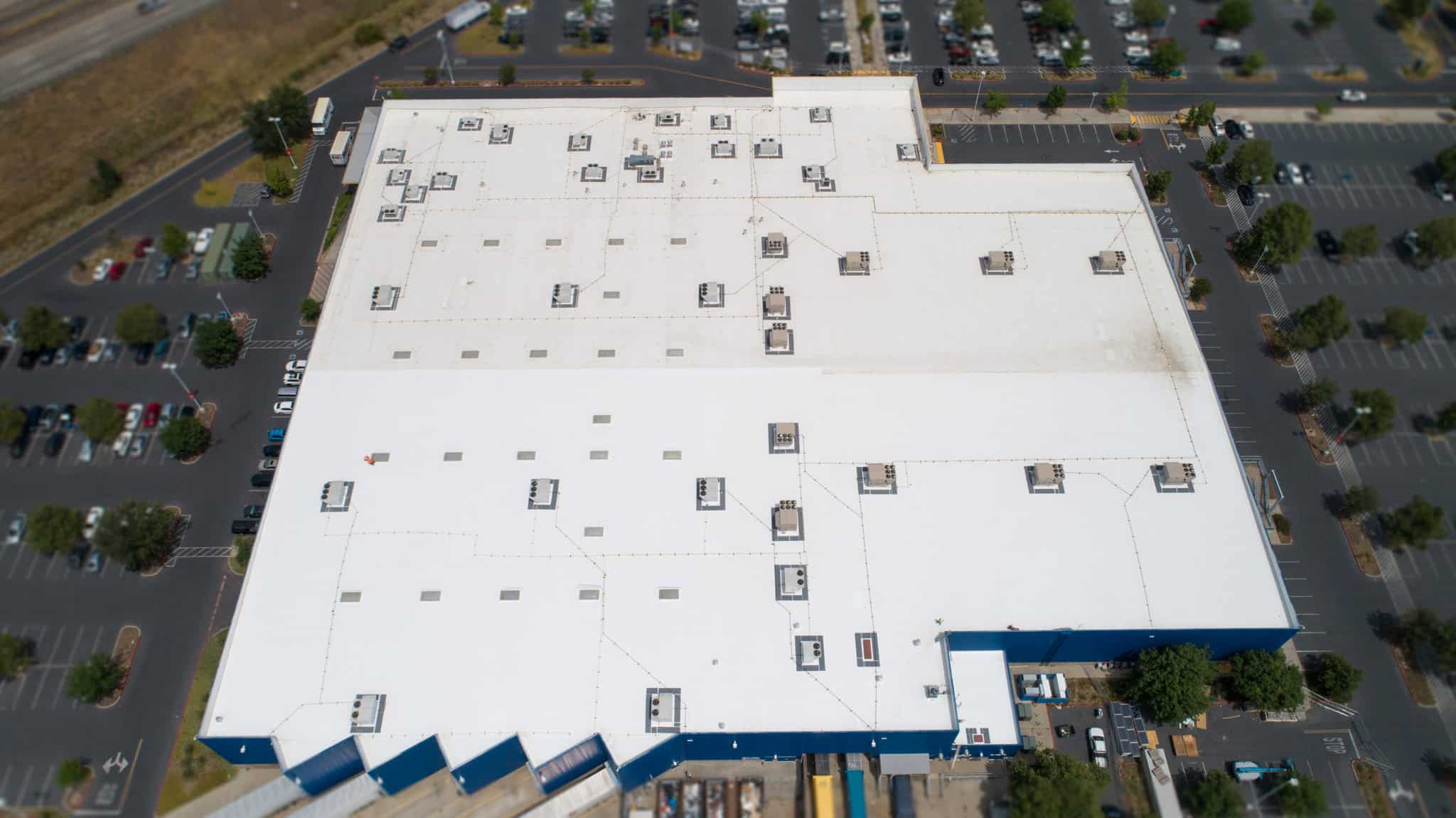
Yes, coating is an effective mid-life restoration approach for modified bitumen systems in good structural condition. Silicone coatings applied over clean APP cap sheet surfaces extend service life and restore reflectivity — a meaningful energy benefit in Florida's climate. The substrate conditions required for a successful coating are the same as for any coating application: dry insulation confirmed by core cuts, sound membrane adhesion, and sealed penetration flashings. A properly coated modified bitumen system in St. Pete can achieve 10 to 15 additional years of service beyond the uncoated surface's remaining life.
Is torch-applied roofing safe for my occupied downtown St. Pete building?
Torch-applied roofing is safe for occupied buildings when executed with proper protocols: written hot-work permits, fire watch during and after application, fire suppression equipment staged on the roof, and clear communication with building occupants and tenants. Many of the historic commercial buildings along Central Avenue, in the Warehouse Arts District, and around the EDGE District have been successfully re-roofed with torch-applied APP. For buildings where torch work is genuinely not appropriate — due to adjacent fire-sensitive materials or occupant sensitivity — self-adhering APP cap sheets provide an equivalent performance alternative without open-flame application.
My modified bitumen roof is blistering. What causes this and is it a serious problem?
Blistering in modified bitumen systems results from moisture vaporizing between membrane plies or between the membrane and its substrate, creating vapor pressure that expands the membrane surface. Small blisters that are stable and not growing do not immediately compromise waterproofing integrity. Large, growing, or ruptured blisters are more serious — the ruptured surface is open to UV oxidation and water entry. Root causes in St. Pete typically include moisture trapped between plies during installation (a humidity-exposure risk during wet-season application), inadequate adhesion between plies in an adhesive-applied two-ply system, or moisture that has entered through an adjacent defect and is vaporizing at the membrane interface during summer heat. Inspection is needed to determine severity and whether repair or systematic remediation is warranted.
 Commercial Roof Repair in St. Petersburg | Planned & Emergency
 Commercial Re-Roofing
 Occupied Building Re-Roofing
 Roof Recover and Overlay