
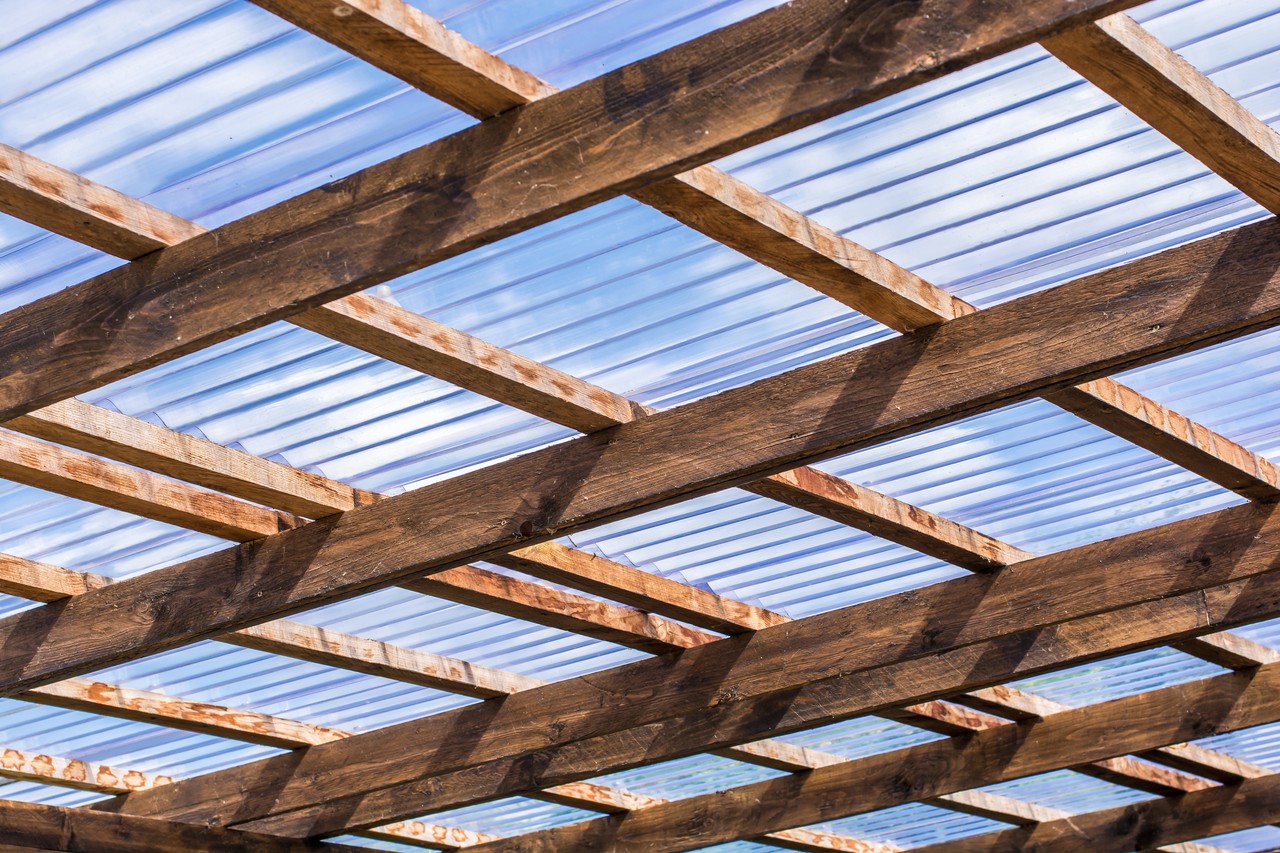
Metal R-panel roofing is the practical workhorse of the St. Petersburg commercial and light-industrial market — the exposed-fastener through-fastened panel system that covers warehouses in the Gateway area, self-storage facilities along Ulmerton Road, light manufacturing in the Pinellas Park industrial corridor, and countless flex-space and strip-commercial buildings throughout Pinellas County. R-panel's combination of cost efficiency, structural performance, and relatively fast installation has made it the default choice for utilitarian commercial construction in this market for decades. It is also a roofing system whose specific failure modes in Pinellas County's coastal environment are predictable enough that preventive maintenance on existing R-panel buildings represents some of the highest-return roofing expenditure available to commercial owners in this market.
Salt air is the defining environmental challenge for R-panel systems in Pinellas County. Tampa Bay to the east and the Gulf of Mexico to the west subject the entire Pinellas peninsula to salt-laden air that attacks the most vulnerable component of any exposed-fastener metal roofing system: the fastener itself. Standard hex-head zinc-plated steel screws driven through the panel into the structural purlin create a point where bare metal — the screw shank and the drilled hole edge in the panel — is exposed to the atmosphere, where salt-driven galvanic corrosion concentrates. At coastal locations within a mile or two of open salt water, this fastener corrosion process is measurably faster than at Gateway area locations several miles inland. Within 10 to 15 years on a barrier-adjacent building, fastener shanks corrode to a diameter fraction of their original size, losing the clamping force that keeps the neoprene washer compressed against the panel surface and that secures the panel to the structural frame.
Fastener failure in R-panel systems creates two simultaneous problems: weathertightness failure at the fastener location as the neoprene washer no longer seals against the panel face, and wind-load capacity reduction as fastener shear and pullout resistance diminish with cross-sectional corrosion. In a St. Pete hurricane event, a building where 30 to 40 percent of R-panel fasteners have significant corrosion degradation is genuinely at risk of panel uplift — not because the panel itself has failed, but because the fasteners connecting it to the structure can no longer resist the design uplift loads. Fastener replacement programs — systematically replacing corroded fasteners with new stainless steel or high-quality coated steel screws before they fail — are among the most cost-effective hurricane preparedness investments for Pinellas County R-panel buildings.
Panel sealant degradation is the second major maintenance concern on St. Pete R-panel buildings. Exposed-fastener metal roofing relies on lap sealant applied between panel ribs at side-laps, and on foam closure strips at eave and ridge transitions, to prevent water infiltration through these joints. Florida's subtropical UV exposure degrades urethane and silicone sealants over a 5-to-10-year cycle as the polymer binder oxidizes and the sealant loses adhesion to the adjacent metal surface. When lap sealant fails, the natural capillary action between two closely adjacent metal panel faces draws water uphill against the direction of drainage during intense rainfall — the St. Pete afternoon thunderstorm scenario delivers exactly the rainfall intensity that drives capillary infiltration through degraded lap sealant most aggressively.
Panel surface coating integrity is a third performance dimension for metal R-panel in Pinellas County's salt and UV environment. Factory-applied Kynar (PVDF) paint coatings provide the best long-term color retention and corrosion resistance in coastal Florida conditions — typically 20 to 25 years of full-gloss retention before chalking becomes significant. Polyester paint systems, common on economical panel products, chalk and fade substantially faster in Florida's UV, and once chalking reaches the bare metal surface, corrosion initiates at the coating failure points. When surface coating failure reaches the point where bare metal is visible across significant panel areas, touch-up coating with a compatible coating product can delay further corrosion, but panels with widespread coating failure require a more systematic response — either full panel replacement or application of a metal roofing coating system that encapsulates the surface and restores corrosion protection.
Silicone and acrylic metal roofing coatings represent the most cost-effective restoration approach for St. Pete R-panel buildings where panel integrity is sound but surface coating has degraded to a point that allows corrosion initiation. These coating systems — applied over clean, primed metal surfaces — encapsulate the panel, restore corrosion protection, and can add meaningful reflectivity improvement if white or light-colored products are specified. On a 20,000-square-foot Gateway area warehouse with degraded polyester-finish R-panel, a coating system typically costs 25 to 40 percent of full panel replacement cost and extends the building's service life by 10 to 15 years when applied over panels that are structurally sound. The qualification step — confirming panel structural integrity before coating rather than coating over panels with advanced section loss — is where field experience matters.
New R-panel installation for commercial buildings in Pinellas County today should specify Galvalume steel substrate with Kynar 500 (PVDF) paint finish at minimum, and stainless steel fasteners for any building within three miles of salt water. The cost premium for these specifications over standard zinc-plate fasteners and polyester paint panels is modest on a per-square-foot basis and is repaid many times over in extended service life, reduced maintenance frequency, and preserved wind-uplift capacity in the 15-to-25-year operational horizon of a new building. Buildings specified with standard fasteners at coastal locations will require fastener replacement programs within 10 years — a cost that building owners systematically underestimate when evaluating lower upfront panel and fastener specifications.
For industrial facilities in the PIE airport area and the Airco Aviation Business Center vicinity, R-panel also requires consideration of jet fuel exhaust exposure on downwind panel surfaces. Hydrocarbon exhaust deposits on metal panel surfaces accelerate certain coating degradation mechanisms and can contribute to fastener corrosion at coating breach points. Facilities with direct exhaust exposure benefit from more frequent surface inspections and cleaning programs than standard Gateway area industrial buildings, and from specification of coating systems with demonstrated resistance to petroleum-based exhaust deposits in the restoration selection.
Questions Owners Ask
How do I know when R-panel fasteners need to be replaced on my St. Pete building?
Visual indicators of fastener corrosion include rust staining radiating from screw heads on the panel surface, brown streaks running downslope from fastener locations visible from the ground, fastener heads that spin without resistance when hand-turned (indicating shank corrosion below the panel surface), and neoprene washer material that is cracked, hardened, or missing rather than resilient and intact. Any of these indicators on a coastal Pinellas County R-panel building warrants a systematic fastener assessment — not just spot repair of obviously failed fasteners — because coastal salt-air corrosion affects fasteners uniformly across exposed roof areas rather than at isolated points.
Can R-panel be coated to extend its service life, or does degraded panel need to be replaced?
Panel that retains structural integrity — no perforation, no panel face section loss greater than roughly 20 percent of original thickness — can be successfully coated to restore corrosion protection and extend service life. Panels with active rust perforation, buckled or deformed rib profiles, or widespread surface corrosion that has penetrated through the substrate metal require replacement rather than coating. We conduct a panel-by-panel visual assessment before recommending a coating approach, specifically identifying panels that are too compromised for coating and should be replaced as part of the restoration project.
What is the difference between R-panel and standing seam metal roofing, and which is better for St. Pete?
R-panel is an exposed-fastener system — screws penetrate the panel face and are visible from outside. Standing seam uses concealed clips that attach the panel to the structure without penetrating the panel face, eliminating the fastener-at-panel-surface corrosion and leak vulnerability that is R-panel's primary weakness in a salt-air environment. Standing seam costs significantly more than R-panel but provides superior performance in coastal Florida conditions, particularly for buildings with longer design lifespans, higher architectural standards, or barrier island exposure. For utilitarian warehouse and industrial construction where first cost is the primary driver, R-panel with stainless fasteners and quality coatings remains a practical choice.
Does my R-panel roof meet current Florida Building Code hurricane wind requirements?
It depends on when it was installed, the fastening pattern used, and the specific panel profile and gauge. R-panel installations predating the post-Andrew (1992) and post-Charley (2004) code updates very likely do not meet current Pinellas County minimum wind-uplift requirements. Even post-2004 installations may have inadequate fastening density at perimeter and corner zones if the original contractor did not follow the enhanced fastening requirements those zones demand. We assess wind-load compliance by reviewing available installation documentation and by inspecting fastening pattern density at critical zones — a critical step before any hurricane season for an older R-panel building.
My R-panel warehouse is leaking at multiple ridge locations. What is causing this?
Ridge leaks on R-panel buildings are almost always caused by one of three conditions: failed or missing ridge foam closure strips, which are the foam seals that fill the corrugated profile opening between the panel and the ridge cap; lap sealant failure at the ridge cap side-lap joints; or ridge cap fastener corrosion that has allowed the cap to lift or separate from the panels below. In St. Pete's salt environment, ridge foam closures deteriorate faster than they do in inland markets, and ridge caps with exposed steel fasteners are corrosion risk points that warrant inspection every five to seven years on coastal Pinellas County buildings.
 Commercial Roof Repair in St. Petersburg | Planned & Emergency
 Commercial Re-Roofing
 Occupied Building Re-Roofing
 Roof Recover and Overlay