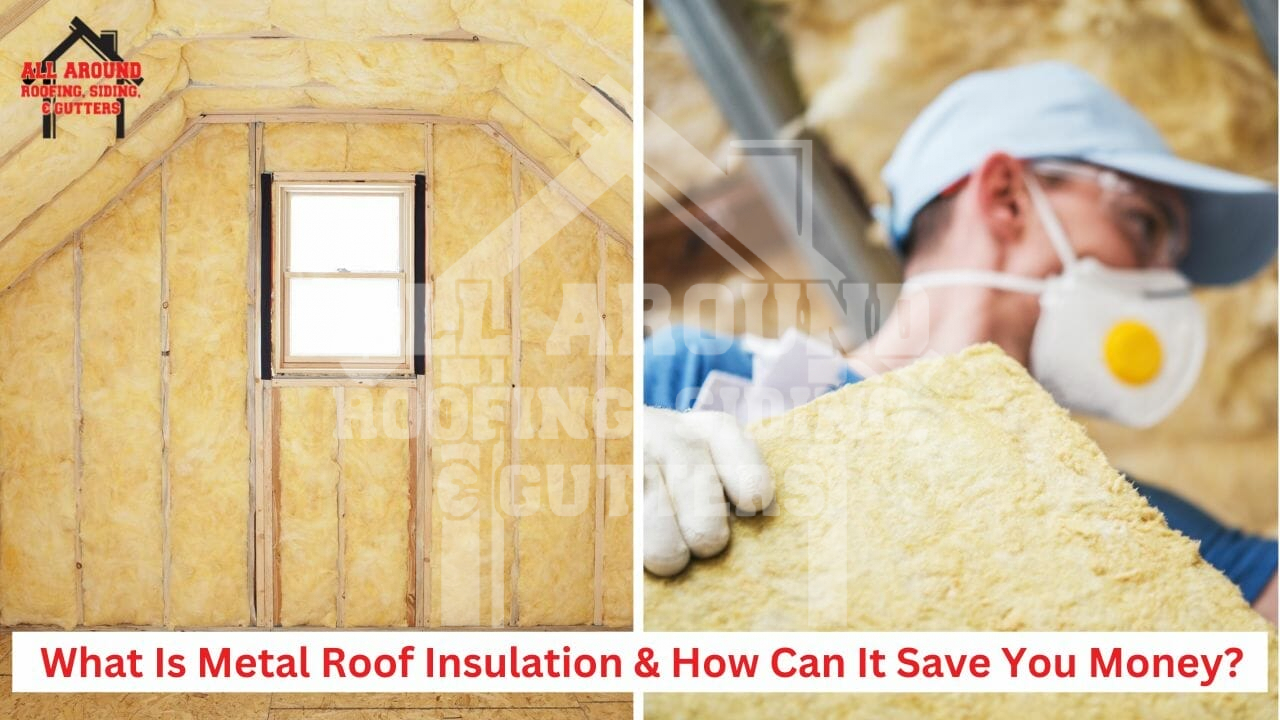
Roofing insulation in St. Petersburg faces physical forces that are the direct inverse of what designers in cold climates manage. In Minnesota or Ohio, vapor drive pushes warm, moist interior air upward in winter, and the insulation assembly is designed to keep that moisture from condensing within the assembly. In subtropical St. Petersburg, the opposite condition dominates: the exterior is hot and humid while the interior is air-conditioned and relatively dry, creating a vapor drive from outside the building inward — from the saturated summer atmosphere at the roof surface downward through the assembly. Vapor retarders positioned for northern climates would be placed on the wrong side of the assembly if applied without adjustment for Florida's inverted vapor drive. Understanding this inversion is fundamental to specifying insulation assemblies that perform without trapping moisture in St. Pete's climate.
Practical consequences of this vapor drive reality appear most clearly in post-hurricane moisture surveys. When a hurricane or major wet-season storm event drives water into a St. Pete commercial roof assembly through compromised membrane or flashing details, that water joins whatever ambient moisture has been slowly diffusing upward through Florida's inverted vapor drive mechanism. The result is insulation saturation that can be extensive even when the interior leak evidence is modest — water migration through lightweight concrete deck fill or fiberboard insulation panels covers large areas before appearing at ceiling level. Core cuts across a broad grid of the roof surface, not just at the immediate stain location, are required to map the actual extent of wet insulation on a post-storm-event St. Pete commercial roof.
Recovery board installation is one of the most important but least glamorous decisions in the commercial roofing specification process. When an existing roof system is being restored or overlaid rather than fully torn off, recovery board — typically half-inch or quarter-inch polyisocyanurate or high-density fiberboard — is installed over the existing membrane as a stable substrate for the new membrane. In St. Pete, recovery board selection requires specific attention to moisture absorption characteristics. Fiberboard recovery board, while economical, is susceptible to moisture absorption in Florida's humid conditions if it is exposed before the new membrane is installed — wet-season scheduling constraints make this a real risk. Polyiso recovery board with foil facers resists moisture absorption and provides better compatibility with Florida's ambient conditions during installation.
Insulation R-value decisions for St. Petersburg commercial buildings follow different logic than for cold-climate markets. The primary benefit of roof insulation in Florida is reducing heat gain from the hot roof surface into the conditioned building interior — a summer cooling load reduction. The optimal R-value from an energy-economics standpoint in Florida reaches diminishing returns faster than in cold climates because Florida has essentially no heating season where insulation value translates to heating cost reduction. Current Florida Building Code Energy Conservation requirements specify minimum R-25 for new commercial roof construction in Climate Zone 2 (where St. Pete is located), and that threshold is generally near the optimal life-cycle cost point for most commercial building types in the area. Specifying significantly higher R-values adds first cost without proportional energy savings in this climate zone.
Wet insulation discovered during tear-off or core-cut surveys on St. Pete commercial buildings drives different decisions than in northern markets. In a cold climate, wet insulation discovered in February may be partially frozen and measurably less compromised by short-term saturation than the same material saturated in August in Florida's warm conditions. Wet insulation in subtropical heat incubates biological growth — mold and mildew colonization of organic insulation components and deck-side materials — within 48 to 72 hours of sustained moisture at Florida's ambient temperatures. This means that wet insulation found during a Pinellas County commercial roof project has usually been deteriorating for longer than its moisture content alone suggests, and the decision to replace versus dry and reuse is weighted more heavily toward replacement than in colder markets where damaged insulation may be recoverable through drying.
Polyisocyanurate board is the dominant insulation type in current Pinellas County commercial roofing specifications — it provides the highest R-value per inch of any common rigid insulation, holds up reasonably well in Florida humidity compared to alternative materials, and is compatible with all current membrane systems including TPO, PVC, and modified bitumen. Tapered polyiso installation — using insulation boards cut on a slope to direct drainage toward roof drains or scuppers — is a technique we apply on low-slope commercial roofs in St. Pete with chronic ponding problems. Positive drainage eliminates the ponding water conditions that accelerate membrane aging and biological growth, and tapered insulation achieves it without structural modification to the roof deck.
Expanded polystyrene (EPS) insulation boards offer better long-term moisture resistance than standard polyiso in applications where the insulation may experience intermittent moisture exposure — above-deck applications on concrete deck buildings or below-grade applications adjacent to planter boxes on some downtown St. Pete rooftop gardens. EPS does not absorb and retain moisture the way polyiso can when its facer is compromised, making it a durable choice in high-moisture-exposure positions. The tradeoff is lower R-value per inch compared to polyiso and higher cost per R-value achieved, so EPS is specified selectively rather than as a general replacement for polyiso in standard applications.
When a commercial building in St. Petersburg requires full tear-off and replacement — driven by wet insulation findings, layer-count code limits, or wind-uplift deficiency — the insulation replacement phase is the point where the entire performance envelope of the new system is established. Fastening pattern and insulation board size selection determine wind-uplift resistance; board type and thickness determine thermal performance; tapered configuration determines drainage performance. These decisions made during the insulation specification phase have 20 to 30-year consequences for the building's performance in St. Pete's demanding climate, and they deserve more deliberate attention than the membrane selection that tends to receive most of the project specification focus.
Questions Owners Ask
How do I know if my roof insulation is wet before committing to a full replacement?
Core cuts — small, precisely located cuts through the entire roof assembly to the deck — provide the most reliable insulation moisture assessment. We conduct core cuts on a grid pattern, typically at 10 to 15-foot intervals across the roof area, plus at all locations with known leak history. Infrared thermography conducted at dusk can complement core cuts by identifying large wet areas efficiently, but IR alone is not reliable enough for a replacement decision — it can produce false positives in Florida's humid conditions. A combination of IR mapping and targeted core cuts gives the most accurate moisture picture before committing to tear-off scope.
Can wet insulation be dried and left in place rather than replaced?
In some circumstances, yes — but the bar is higher in Florida than in colder climates. For insulation that has been wet for a short period (hours to a few days), is not organic-faced material, and has no visual or olfactory evidence of biological growth, drying and retaining may be appropriate for isolated small areas. For insulation that has been saturated through a rainy season or has been holding moisture long enough to develop mold — extremely common in subtropical conditions — removal and replacement is the appropriate action. We make this determination based on core cut samples and moisture meter readings rather than assumptions.
What is the minimum R-value required for new commercial roofing in Pinellas County?
Florida Building Code Energy Conservation (FBCEC) requires a minimum of R-25 for new commercial roof construction in ASHRAE Climate Zone 2, which covers all of Pinellas County. This applies to new construction and to replacements where the assembly is brought to current code. Insulation upgrades that improve on this minimum are evaluated against the incremental energy cost reduction they provide — in Florida's cooling-dominated climate, the marginal benefit of R-values above approximately R-30 to R-35 is modest compared to the added insulation cost.
Does the type of roof deck affect insulation selection for a St. Pete commercial building?
Yes. Steel deck construction, the most common deck type for new commercial buildings in Pinellas County, requires insulation board attachment by mechanical fasteners in a pattern sufficient to achieve required wind-uplift resistance — adhesive alone is not adequate for most steel deck applications given St. Pete's code wind-load requirements. Concrete deck construction permits full adhesive attachment with lower fastening density. Lightweight concrete fill over steel deck requires fastener selection compatible with the fill material's pullout resistance. Each deck type has specific attachment requirements that affect insulation specification.
My building is getting a new roof membrane — do I need new insulation too?
Not necessarily. If you are doing a roof recover (overlay) rather than full tear-off, the existing insulation remains in place and only recovery board is added above it. Core cut results determine whether the existing insulation is dry and dimensionally sound enough to remain. If tear-off is required due to layer count limits, widespread wet insulation, or wind-uplift deficiency, insulation replacement is typically part of the scope and presents an opportunity to upgrade to current code R-values and optimized attachment patterns. We assess existing insulation condition during every pre-project inspection and include a specific insulation recommendation in every scope proposal.
 Commercial Roof Repair in St. Petersburg | Planned & Emergency
 Commercial Re-Roofing
 Occupied Building Re-Roofing
 Roof Recover and Overlay