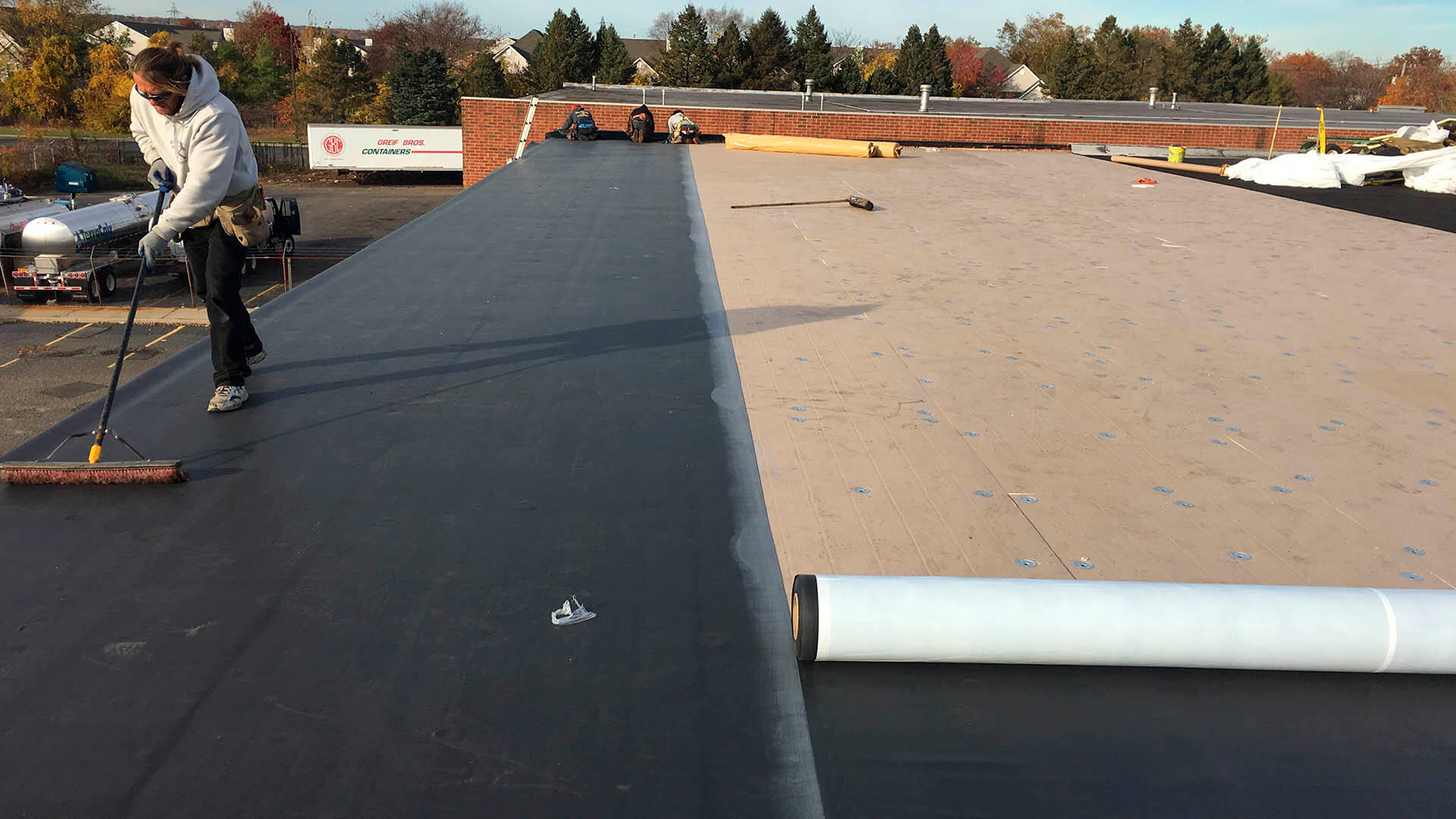
EPDM — ethylene propylene diene monomer — was the dominant commercial flat roofing membrane in the northern United States for decades, and it remains an excellent system in climates where thermal cycling, UV stability of organic membranes, and resistance to freeze-thaw conditions are the primary design drivers. St. Petersburg, Florida is not that climate. EPDM's black color absorbs solar radiation that St. Pete's subtropical sun delivers relentlessly, creating roof surface temperatures that exceed 180°F during summer afternoons and accelerate the aging of adhesive lap seams — the same seams that must remain watertight through 53 inches of annual rainfall and resist wind uplift in one of the most hurricane-exposed commercial markets in the country.
That said, EPDM is installed on some Pinellas County commercial buildings, and those installations deserve competent maintenance, repair, and eventual replacement rather than dismissal. Gateway area industrial buildings dating to the 1990s, some older Carillon Business Park office structures, and scattered light-commercial buildings along the Ulmerton Road corridor were specified with EPDM during the period when it was commonly used before TPO and PVC became the dominant Florida single-ply options. Owners of these buildings need contractors who understand EPDM's specific failure modes in a subtropical environment — not contractors who default to TPO replacement as the only answer regardless of the existing system's actual condition.
UV aging is the primary performance challenge for EPDM in St. Petersburg's climate. The rubber surface of an EPDM membrane develops chalking and micro-surface cracking under sustained UV exposure — a process that proceeds faster in Florida's solar intensity than in the Midwest or Northeast markets where EPDM was originally optimized. Surface chalking itself does not compromise waterproofing, but the accompanying loss of membrane flexibility makes the system more vulnerable to thermal-cycling fatigue at terminations and penetrations, where the rubber must accommodate daily expansion and contraction cycles. An EPDM system that has been in service in Pinellas County for 15 or more years warrants a detailed inspection of all lap seam adhesion, penetration flashing collar condition, and termination bar securement before making any service life projection.
Lap seam performance is the specific vulnerability of EPDM adhesive-bonded systems in Florida's heat and humidity. Traditional EPDM installations use contact cement adhesive for field lap seams — an adhesive system that was designed for temperature ranges more moderate than St. Pete's summer conditions. As contact cement ages in subtropical heat, it can soften and allow lap seam separation along the bond line, creating the water entry path that produces chronic leak complaints on aging EPDM roofs. When we find adhesive lap failure on an EPDM system, we use cover tape and seam tape systems specifically formulated for EPDM repair rather than applying generic lap sealant, which provides only temporary adhesion on a rubber-to-rubber interface.
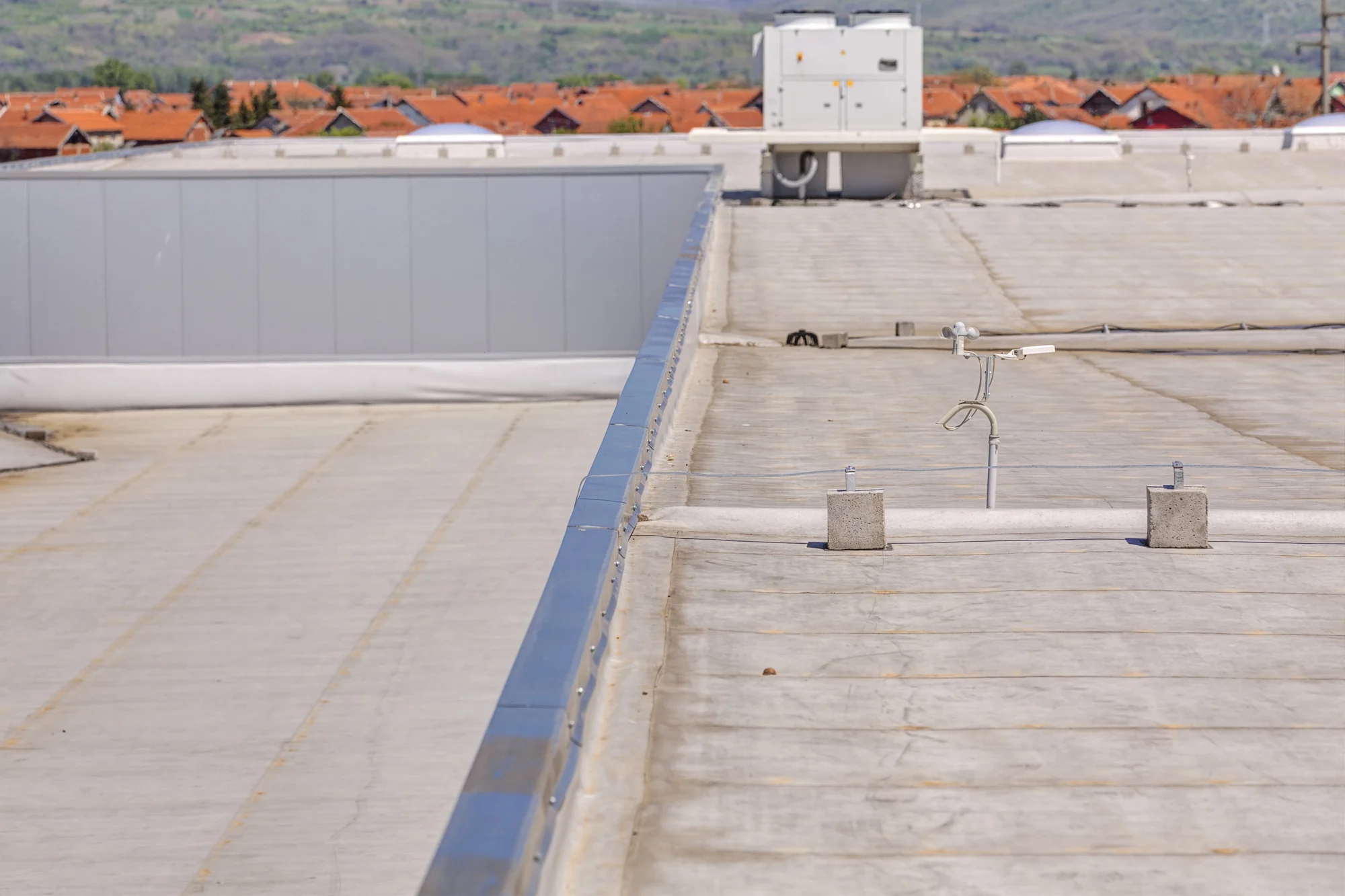
Metal termination bars — the mechanical edge compression strips that hold EPDM membrane terminations against parapet walls and curb edges — are a consistent salt-air corrosion point on Pinellas County EPDM installations. Standard galvanized steel termination bars corrode in the warm, humid, salt-influenced air of coastal St. Pete within five to eight years, losing the mechanical clamping force that keeps membrane terminations watertight. On barrier island buildings or any commercial property with direct salt-water exposure, aluminum termination bars are the appropriate specification, and we replace corroded steel termination bars with aluminum during any EPDM flashing repair that uncovers corroded components.
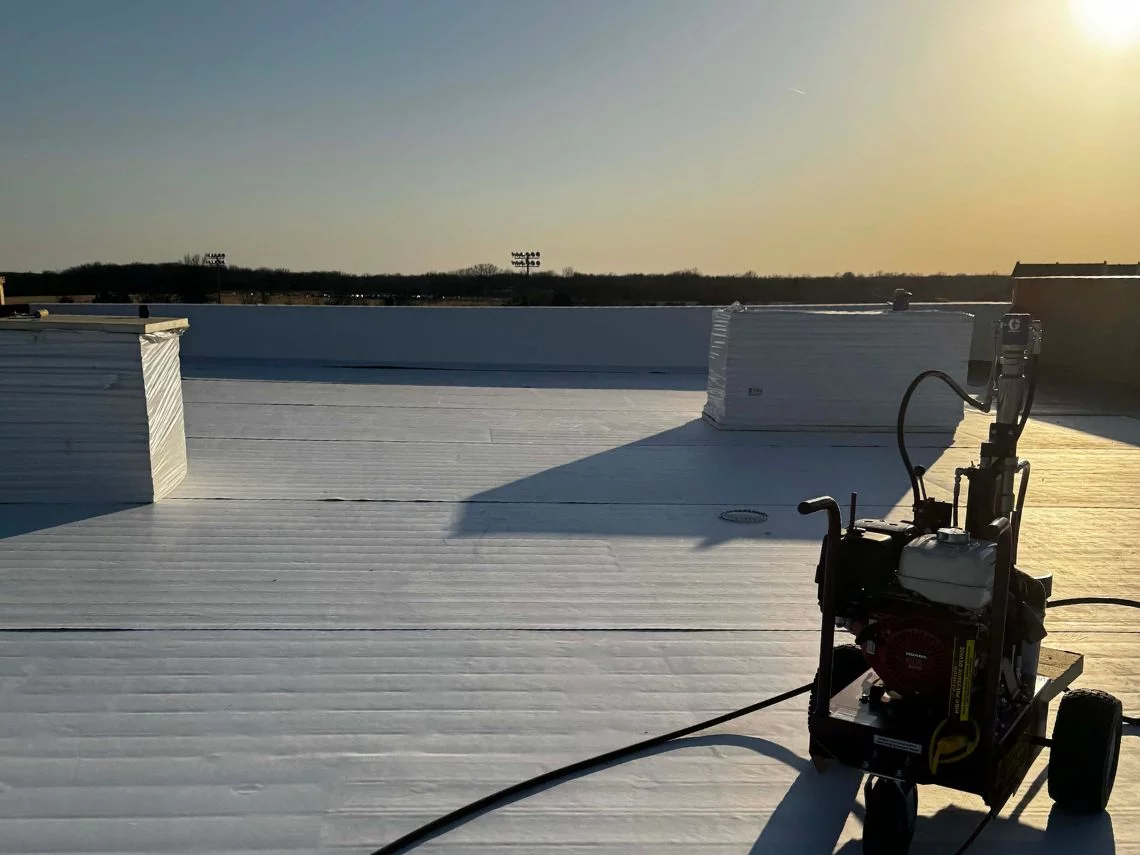
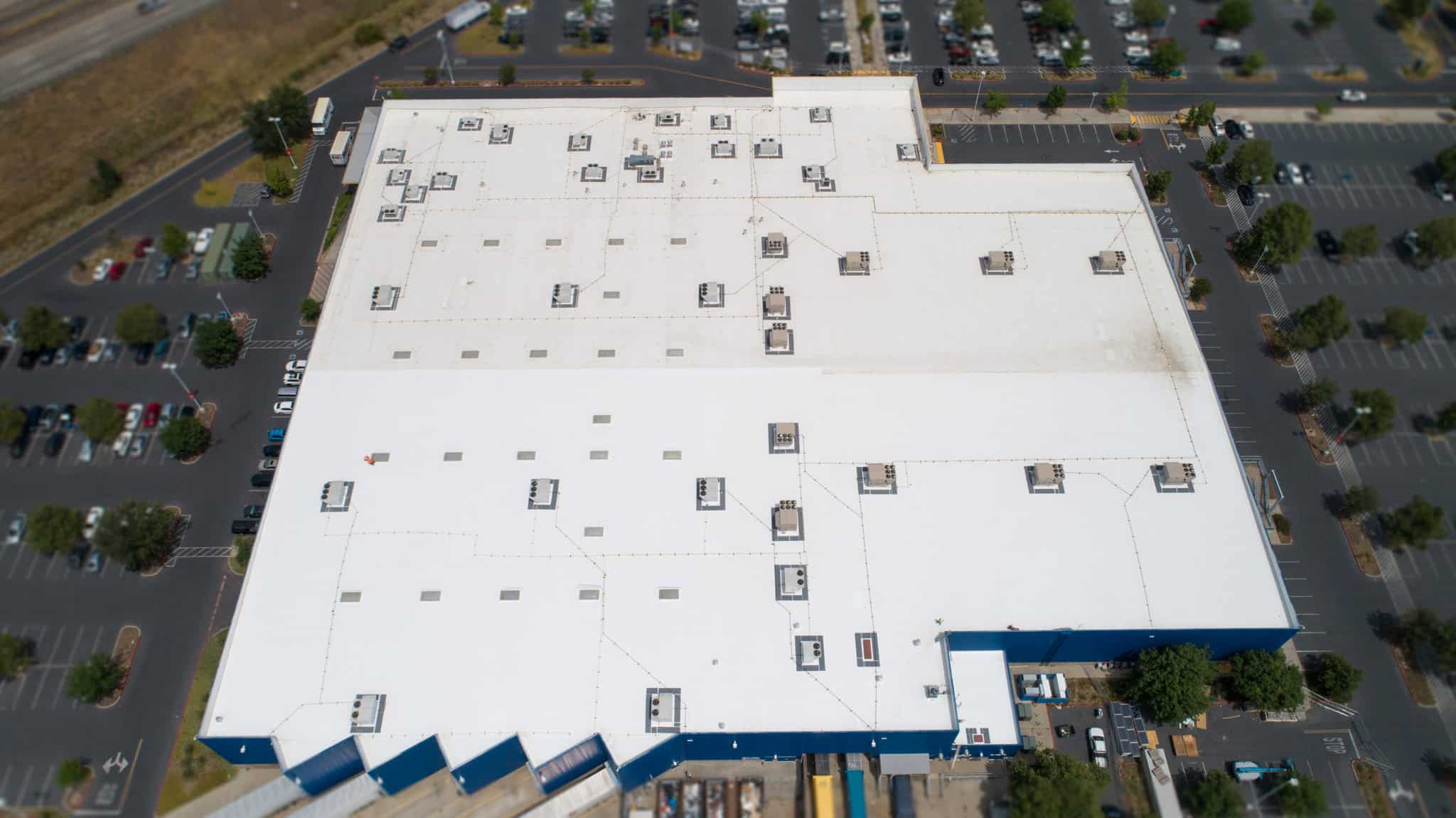
When an EPDM system on a St. Pete commercial building reaches the end of its serviceable life — typically 15 to 25 years depending on initial installation quality and maintenance history — the replacement choice is almost always TPO or silicone-coated SPF rather than another EPDM system. White TPO provides the cool-roof energy performance that EPDM's black surface cannot, and its weldable seams eliminate the adhesive lap-bond vulnerability that causes chronic maintenance issues on older EPDM installations in Florida's heat. The energy savings from switching from black EPDM to white TPO at replacement time are meaningful enough in St. Pete's cooling-dominated climate that the comparison deserves quantification as part of any replacement project planning discussion.
One area where EPDM retains an advantage over TPO in specific St. Pete applications is chemical resistance to certain petroleum-based solvents and greases. This characteristic makes EPDM appropriate for some industrial applications near the PIE airport area or Pinellas Park industrial corridor where occasional chemical spill or exhaust exposure occurs. In these specific applications, EPDM's chemical resistance profile may justify its selection over TPO despite the energy performance disadvantage. For general commercial applications without specific chemical exposure requirements, TPO is the more appropriate Florida specification.
If you manage a commercial building in St. Petersburg with an existing EPDM roof, the most important near-term action is a condition assessment that specifically evaluates lap seam adhesion integrity, penetration flashing collar flexibility, and termination bar corrosion status. These three elements drive EPDM system performance in Pinellas County conditions, and their condition assessment determines whether you have three years of service life remaining or eight — a difference that matters significantly for capital planning in a market where pre-hurricane season timing of roofing work is a real operational constraint.
Questions Owners Ask
Can EPDM lap seam failures be repaired, or does the whole roof need replacement?
Localized lap seam failures can be effectively repaired using manufacturer-approved EPDM seam tape and lap sealant systems, provided the membrane itself is still flexible and has adequate thickness remaining. Widespread adhesive-bond deterioration across large areas of the lap seam network — particularly on systems 20 or more years old in Pinellas County sun — is more accurately addressed through full system replacement than through systematic reseaming of a high percentage of the total lap area. The cost threshold at which re-seaming exceeds replacement cost is typically reached when more than 20 to 30 percent of lap linear footage requires repair.
Is EPDM a good option if I am replacing my roof now, in St. Pete?
For most new commercial roofing in St. Petersburg, TPO or PVC single-ply is the better specification. Both provide superior cool-roof energy performance — critical in Florida's cooling-dominated climate — with comparable or better seam reliability through heat-welding rather than adhesive bonding. EPDM may be appropriate in specific industrial applications with chemical exposure requirements that favor its chemical resistance profile. For general commercial use, we do not recommend new EPDM installations in Pinellas County where TPO or PVC can meet the project requirements.
How does the black color of EPDM affect energy costs in St. Petersburg?
Significantly. A black EPDM roof has a Solar Reflectance of approximately 0.06 — meaning it absorbs 94 percent of solar radiation and reflects only 6 percent. In St. Pete's intense subtropical sun, that absorption creates rooftop surface temperatures above 175°F and substantially increases cooling loads compared to a white reflective membrane. The annual energy cost premium of maintaining a black EPDM roof versus a white TPO or coated roof in St. Petersburg's climate can easily exceed several thousand dollars per year for a 10,000 square-foot building, depending on insulation levels and HVAC efficiency.
My EPDM roof was installed in 2005. Should I be planning replacement now?
A 2005 Pinellas County EPDM installation is approximately 20 years old — within the range where condition assessment drives the replacement decision rather than age alone. We recommend a professional inspection specifically evaluating lap seam adhesion, penetration collar flexibility, and termination bar condition. If seams are sound and metal components are intact, you may have three to five years of serviceable life remaining with targeted maintenance. If seam deterioration is widespread or metal components show significant corrosion, planning a replacement project before the next hurricane season is the responsible position.
What causes EPDM to lift at the roof edges during high winds?
EPDM membrane uplift at perimeter edges typically results from one of three conditions: inadequate initial edge metal securement that does not meet current Florida Building Code wind-uplift requirements, corrosion-driven failure of fasteners or termination bars that have lost clamping force on the membrane termination, or adhesive failure of the membrane-to-wall bond at parapet faces. In Pinellas County's hurricane environment, any of these conditions represents a genuine risk of full membrane uplift during a major storm event. Perimeter securement deficiencies should be repaired before hurricane season regardless of how the rest of the membrane appears from visual inspection.
 Commercial Roof Repair in St. Petersburg | Planned & Emergency
 Commercial Re-Roofing
 Occupied Building Re-Roofing
 Roof Recover and Overlay